In 2014, the most famous prize in mathematics went to a woman for the first time, and she openly described herself as a “slow” mathematician.
Her name was Maryam Mirzakhani. She spent her career on curved surfaces, and her way of working looked, to her own daughter, a lot like painting.
The prodigy who never bragged about speed
Mirzakhani was born in Tehran on 12 May 1977. On paper, her teenage years read like the story of a racing mind. In 1994, in Hong Kong, she became the first Iranian woman to win a gold medal at the International Mathematical Olympiad, scoring 41 out of 42.
The following year, in Toronto, she hit a perfect score and became the first Iranian to win two gold medals at the competition.
Yet she never framed her talent as quickness. “You have to spend some energy and effort to see the beauty of math,” she said. The future Fields medalist called herself, plainly, a slow mathematician.
Doodles her daughter mistook for paintings
Her method had nothing to do with racing through equations. To attack a problem, she drew doodles on sheets of paper and wrote formulas around the drawings. Her daughter described her mother’s work as “painting”.
She claimed no secret recipe either. “It is like being lost in a jungle and trying to use all the knowledge that you can gather to come up with some new tricks, and with some luck, you might find a way out,” she explained.
At Harvard, where she earned her PhD in 2004 under Fields medalist Curtis T. McMullen, she was said to be “distinguished by determination and relentless questioning.” She took her class notes in her native Persian.
Counting loops on a surface full of holes
Her 2004 thesis cracked a problem that had remained open. Picture a surface with several holes, like a pretzel, bent in the special way geometers call hyperbolic. On it, the straightest possible path is called a geodesic.
Some of these paths close into loops that never cross themselves. Mathematicians already knew that the total number of closed loops explodes as longer lengths are allowed. The non-crossing ones, which topologist Benson Farb called “the key object to unlocking the structure and geometry of the whole surface,” remained a mystery.
Mirzakhani showed that they grow far more tamely, at a pace set by the number of holes in the surface (the very feature that makes a coffee mug and a donut identical to a topologist). Her trick was unexpected: she turned counting into measuring volumes in “moduli space”, a vast space where every point stands for a different shape of the surface.
The universe of all possible billiard tables
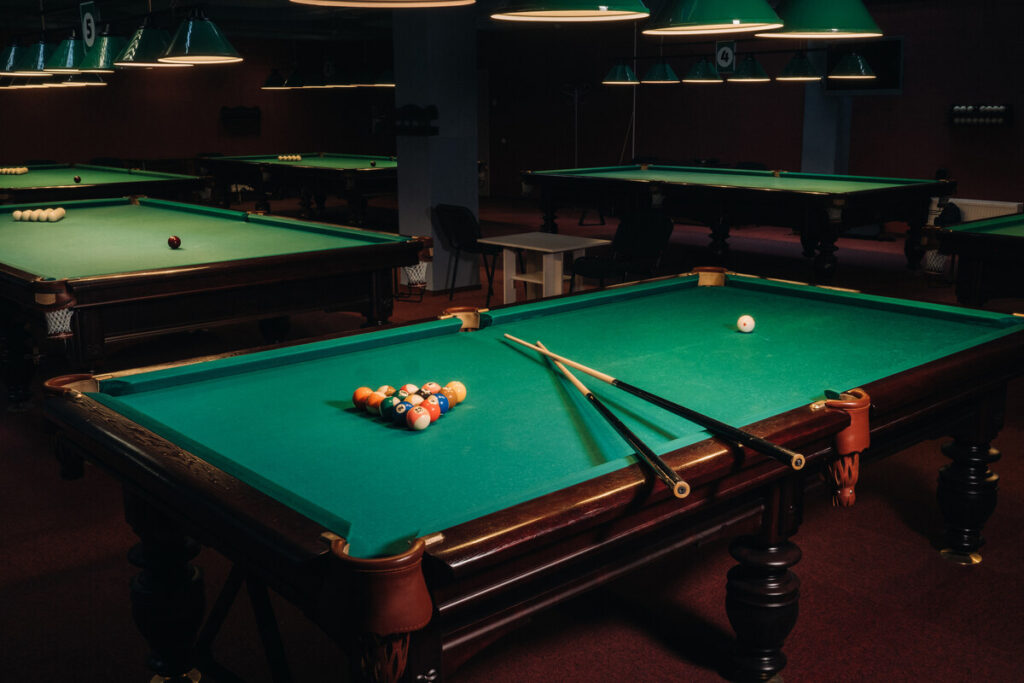
Later, she moved to an even stranger playground. When she received the medal, mathematician Jordan Ellenberg explained that she studied billiards, but with a twist. “She considers not just one billiard table, but the universe of all possible billiard tables,” he wrote, each table changing shape and moving “like a strange planet around the universe of all possible tables.”
His verdict: “This isn’t the kind of thing you do to win at pool, but it’s the kind of thing you do to win a Fields Medal.”
In 2014, with Alex Eskin and input from Amir Mohammadi, she proved that certain paths through this universe of shapes are surprisingly regular rather than chaotic or fractal. The result became known as the “magic wand theorem”. The medal was presented in Seoul on 13 August 2014, eight years after Grigori Perelman had famously turned it down.
A short life with a long echo
Mirzakhani had been diagnosed with breast cancer in 2013, the year before her medal. She died at Stanford Hospital on 14 July 2017, aged 40.
After her death, several Iranian newspapers, along with President Hassan Rouhani, broke a taboo by publishing photographs of her with her hair uncovered. Her birthday, 12 May, is now International Women in Mathematics Day. An asteroid carries her name, and since 2024, so does a crater on the Moon.
Why slow can beat fast
Her story quietly dismantles one of the most stubborn clichés about math: that it rewards the quickest mind in the room. Mirzakhani’s breakthroughs came from patience, drawings and a willingness to stay lost in the jungle a little longer than anyone else, long enough to find a way out.