Ask most people who discovered the five platonic solids and they will say Pythagoras. The truth is messier, and far more interesting, than the legend that got attached to his name.
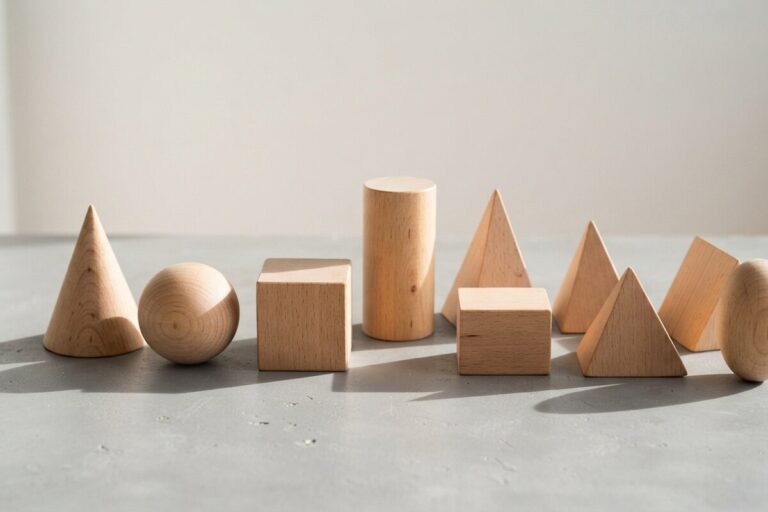
There are exactly five of these shapes: the tetrahedron, the cube, the octahedron, the dodecahedron, and the icosahedron. No sixth one exists, and mathematicians proved that over two thousand years ago. But the story of who actually found them all is where the popular version falls apart.
The myth that credits one man with five shapes
A platonic solid is a convex polyhedron built entirely from identical regular polygons, with the exact same number of faces meeting at every single corner. That strict regularity is what makes the group so small. Only five shapes in the entire universe of three dimensional forms satisfy that rule.
The popular story treats Pythagoras as the man who found and understood all five. It is a tidy narrative, and it is not accurate.
What Pythagoras actually knew, and who filled in the rest
Historical evidence suggests Pythagoras was likely familiar with only three of the five solids: the tetrahedron, the cube, and the dodecahedron. The other two, the octahedron and the icosahedron, are credited to Theaetetus, a mathematician who worked a generation or two later.
Theaetetus did not just spot the missing shapes. He is also the one who gave the whole family its first complete mathematical description, and delivered the earliest rigorous proof that no other convex regular polyhedron could ever exist beyond these five.
Euclid closed the case for good
Around 300 BCE, Euclid took the subject further in Book XIII of his Elements, giving a definitive mathematical treatment of all five solids and confirming, once and for all, that the list stops at five.
The name we still use today comes from Plato, not from any of the mathematicians who actually proved the shapes’ properties. In his dialogue Timaeus, written around 360 BCE, Plato paired four of the five solids with the four classical elements: earth, air, water, and fire. The name stuck to the whole group, even though Plato was a philosopher borrowing the geometry, not the one who worked it out.
A failed solar system that led to real astronomy
The shapes resurfaced in a much stranger context in 1596, when the astronomer Johannes Kepler published Mysterium Cosmographicum. His idea was audacious: nest all five platonic solids inside one another, separated by spheres, and use the resulting structure to predict the distances between the six planets known at the time.
The model failed. The distances it predicted did not match reality. But the work Kepler did while building and testing it pushed him toward a far more important discovery, that planetary orbits are ellipses, not perfect circles. His mistake with ancient geometry became the doorway to the real laws of planetary motion.
These perfect shapes still show up today
The cube, the octahedron, and the tetrahedron appear naturally in certain crystal structures found in nature. In 2011, Dan Shechtman won the Nobel Prize in Chemistry for discovering icosahedral structures in aluminum, an unexpected modern echo of a shape first described in antiquity.
Biology offers an even stranger example. Some viruses, including the herpes virus, spontaneously form the shape of a regular icosahedron. That geometry allows an extremely efficient shell to be built from identical protein units, saving precious space inside the virus’s genetic material.
The next time a five sided list gets attributed entirely to one ancient genius, it might be worth asking who else did the actual proving.