One day at an agricultural research station in England, a scientist turned down a cup of tea. The reason she gave, and the way two colleagues decided to check it, still shapes how scientists judge their experiments today.
A cup of tea at Rothamsted
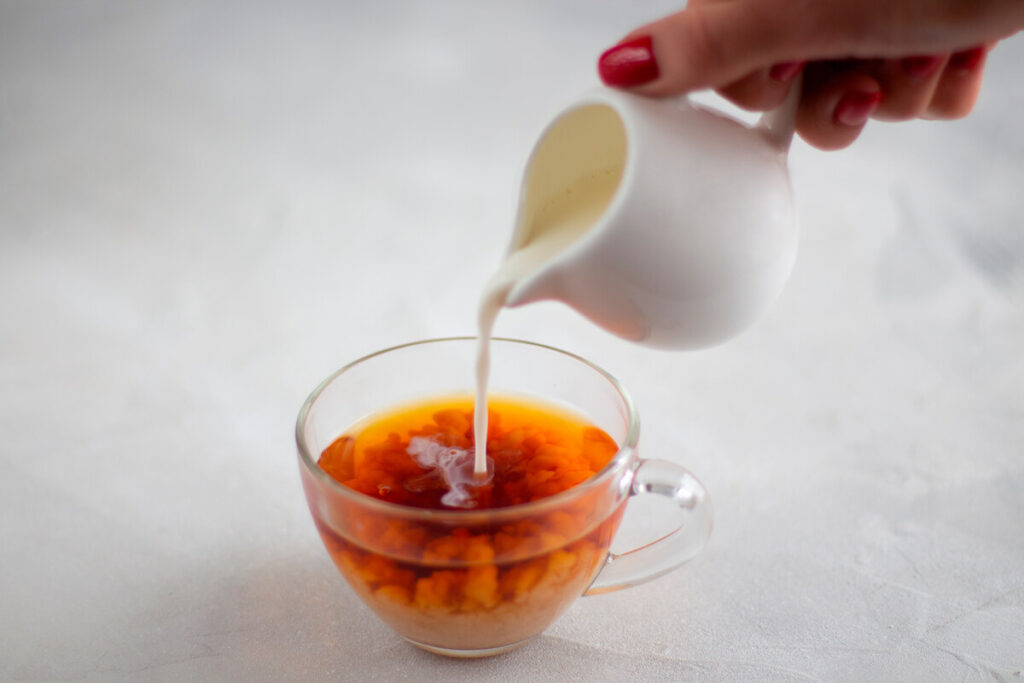
The scene took place at Rothamsted Experimental Station, where the statistician Ronald Fisher had started working in 1919. Fisher had just drawn a hot cup of tea from an urn and offered it to a colleague, Muriel Bristol.
Bristol declined. She preferred the flavour, she explained, when the milk was poured into the cup before the tea. Fisher scoffed: the order of pouring could not possibly change the taste. Bristol held her ground and said she could tell the difference.
A third scientist, William Roach, overheard the debate and settled it with three words: “Let’s test her.”
Who was the lady tasting tea
The woman at the centre of the story was not a bystander. Blanche Muriel Bristol, born in 1888, was a phycologist, a specialist in algae, with a PhD from Birmingham. Her research focused on how algae acquire their nutrients.
Her scientific legacy outlived the tea anecdote. The culture recipe she developed in 1919, known as Bristol’s Media, is still used today to grow green algae in laboratories. A species, Chlamydomonas muriella, is named after her. And William Roach, the man who proposed the test, became her husband in 1923.
Eight cups and one chance in seventy
Roach suggested a simple setup. Prepare eight cups in random order, four with the milk poured first and four with the tea poured first. Bristol would know the rules, could compare cups as much as she liked, and simply had to pick out the four made one way.
The clever part is what happens if she is only guessing. There are exactly 70 different ways to choose four cups out of eight. Only one of those choices is entirely correct. So someone with no talent at all has just 1 chance in 70 of a perfect score, about 1.4 percent.
Getting three or more right, on the other hand, happens by pure luck 17 times out of 70, roughly 24 percent. That is far too common to prove anything. Fisher’s conclusion was strict: only a perfect eight out of eight would be convincing enough to rule out chance.
She got every single one right
According to the statistician David Salsburg, who heard it from Fisher’s colleague H. Fairfield Smith, Bristol identified all eight cups correctly. At the end of the test, Roach proclaimed that she “divined correctly more than enough of those cups into which tea had been poured first to prove her case.”
The episode stayed with Fisher. In his 1935 book The Design of Experiments, he turned a loosely retold version of it into a lesson that takes up less than ten pages. In it, he introduced a starting assumption he called the null hypothesis: here, the idea that the lady has no ability at all, and that any success is luck.
His definition is still quoted today. The null hypothesis, he wrote, is “never proved or established, but is possibly disproved, in the course of experimentation.” And more boldly: “Every experiment may be said to exist only in order to give the facts a chance of disproving the null hypothesis.”
Why randomness mattered more than the tea
The real lesson was not about milk. It was about putting the cups in random order. Fisher had already argued, in a 1923 paper with Winifred Mackenzie on crop variation, that randomly assigning treatments to plots of land was the “physical basis of the validity of the test.” Without it, hidden differences such as soil fertility could quietly fake a result.
Randomization, replication and blocking became the three pillars of his method. They spread from agricultural trials to psychology, education and medical research. The statistician Deb Basu later called the tea case “one of the two supporting pillars” of the randomization analysis of experimental data.
Fisher’s ideas also carry a famous cutoff: the 5 percent threshold he used, which later became a rule scientists live by. And it was Fisher who popularized the t-distribution of a Guinness chemist who signed his math as Student.
A small bet with a long shadow
Every time a new drug is tested against a placebo in random order, a little of that Rothamsted tea break is in the room. The question is the same one Fisher asked: how likely is this result if nothing real is going on?
It took a stubborn algae scientist, a sceptical statistician and eight cups of tea to make that question precise. Bristol never wrote the theory, but she won the argument, and science still runs on the test she passed.