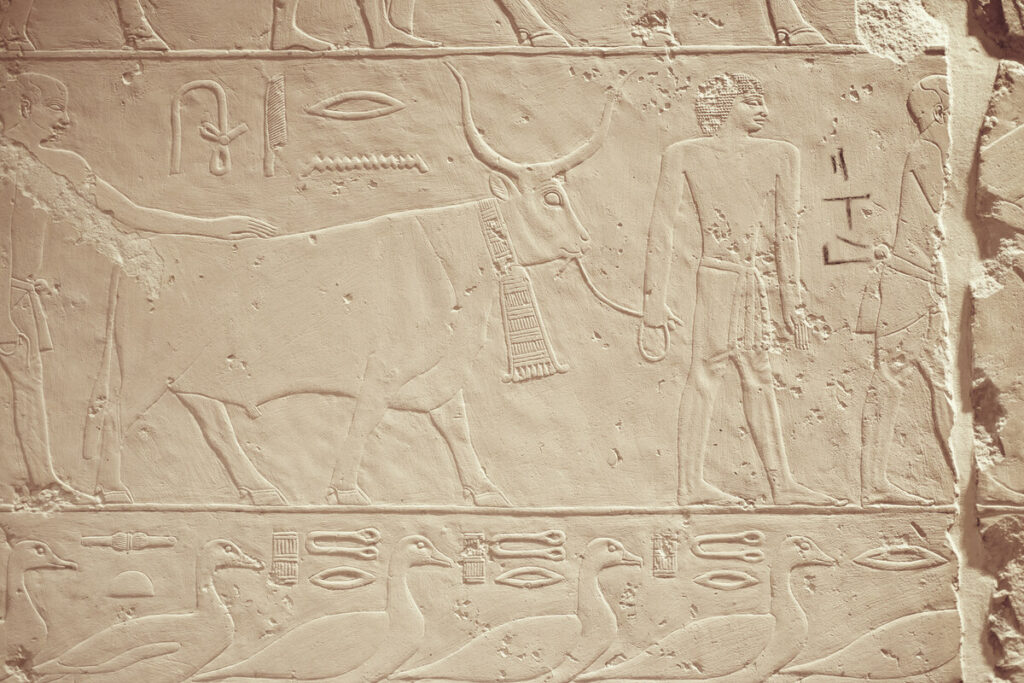
The oldest known census in history did not record a single human being. In ancient Egypt, officials counted cattle, and they did it every two years throughout the Old Kingdom.
Most of us picture a census as a simple headcount: knock on every door, write down how many people live there, add it all up. History tells a very different story. From the start, counting a population was about money, armies and power far more than curiosity.
A headcount that started with cows
The idea that a census has always been about people is the first myth to go. Egypt’s earliest known census tracked livestock, not the humans who looked after it.
Even the word hints at the real purpose. “Census” comes straight from the Latin censere, which means to assess or to estimate. It is a word about valuing things, not just counting them, and it has barely changed since Roman times.
A census was never a neutral list of names. It was an inventory of what a ruler could tax or send to war.
Empires that counted to stay in control
In ancient Iran, one of the earliest systematic census practices took shape under the Achaemenid king Darius the Great. His survey covered an empire stretching over three continents, and its goal was blunt: financial and military planning.
Rome turned the census into a social machine. Tradition credits King Servius Tullius with launching the first systematic Roman census around 550 BCE, when it counted roughly 80,000 citizens. Under the Republic it was held every five years, and it decided something that mattered enormously: the exact social class of every citizen.
At the other end of Eurasia, the Han dynasty ran one of the oldest complete censuses still preserved today. In the year 2 CE, it recorded 57,671,400 people, a strikingly precise figure that has survived two thousand years.
Conquerors, crusaders and kings
The census kept adapting to whoever needed it. Shortly after the Rashidun caliphate was formed, Caliph Umar ordered regular censuses, a methodical administrative habit set up well before medieval Europe had anything similar.
In 1086, William I commissioned the Domesday Book in England, a meticulous survey with one clear objective: taxing the lands he had just conquered. A century later, in 1183, the crusader Kingdom of Jerusalem counted itself to measure the military resources it could rally against a possible invasion led by Saladin.
France held its first known national census in 1328, under the title L’État des paroisses et des feux, roughly “the state of parishes and hearths”. And in 1577, Philip II of Spain ordered a full census of all his colonial possessions in the Indies.
The empire that counted without writing
The most astonishing census of all may belong to the Inca Empire. The Incas had no writing system in the traditional sense, yet they still kept census records.
Their tool was the quipu, a set of knotted cords. The knots followed an ingenious base-ten number system, the same base we still use for everyday arithmetic. Like the abacus, it is proof that serious record-keeping never depended on pen and paper.
Why no census is ever perfectly accurate
The second myth is that a careful census captures every single person with flawless precision. Modern statisticians openly admit the opposite.
Every census counts some people twice and misses others entirely. Instead of pretending otherwise, statistical agencies run dedicated post-enumeration surveys after the main count, then apply rigorous adjustments to correct the totals.
Today’s censuses also go far beyond a headcount. They collect detailed information on housing, employment, the full demographic structure of a population and a long list of socio-economic traits, increasingly through digital administrative records, online forms and even mobile devices.
When being counted became a protest
Because a census reflects who matters to the state, it can also be refused. In 1911, several British suffragist organizations openly boycotted the national census to protest the exclusion of women from the vote. Their slogan: “No vote, no census.”
If the state would not count women as voters, women would not let the state count them at all.
From cattle to all of humanity
In 1661, the Italian astronomer Giovanni Battista Riccioli produced the first serious estimate of the entire world’s population. From Egyptian herds to a guess at every person on Earth, the census has always been less about counting heads than about deciding what, and who, really counts.