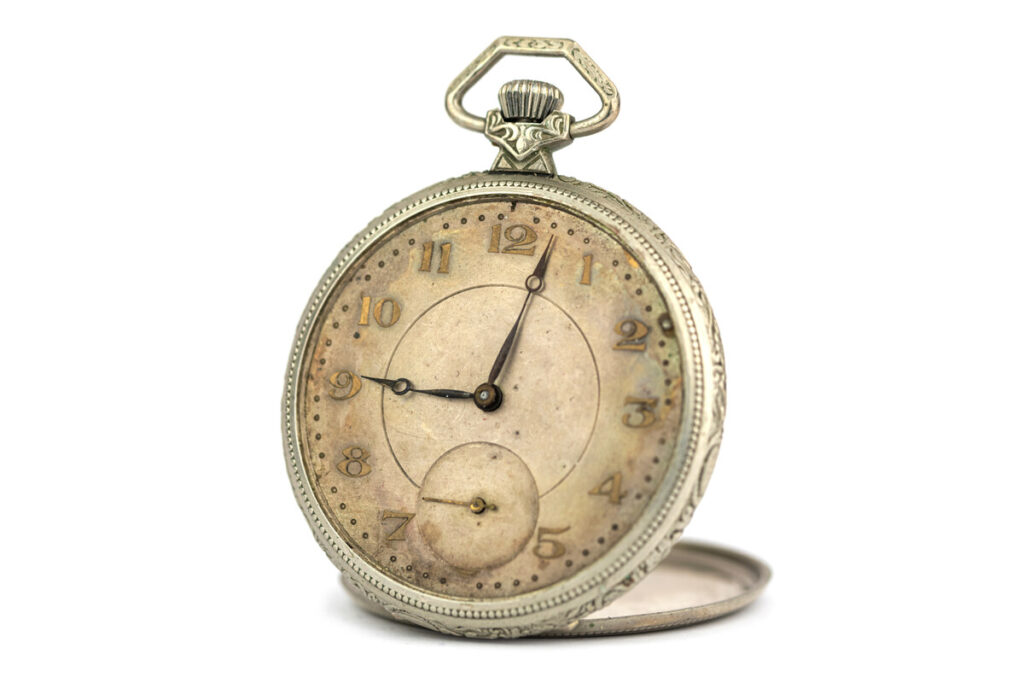
Every time a clock ticks past 60 seconds, you are using a counting system invented by scribes who pressed numbers into wet clay nearly 4,000 years ago.
The Babylonians of ancient Mesopotamia did not count in tens. They counted in sixties. And that choice still shapes your watch, your calendar app and every circle you have ever measured in degrees.
Why 60 beat 10 for ancient number crunchers
Babylonian mathematics ran on a sexagesimal system, a fancy name for base 60. It is the reason a minute has 60 seconds and a full circle has 360 degrees.
The choice was not random. The number 60 can be divided evenly by 1, 2, 3, 4, 5, 6, 10, 12, 15, 20, 30 and 60. Ten only splits cleanly into halves and fifths. For a scribe sharing out grain, land or silver, 60 made fractions far less painful.
It was not perfect. Some fractions, like one thirteenth, never come out as a clean, finite value in base 60. The scribes did not give up. They used a clever approximation that turned an impossible problem into a number that was good enough for practical work.
A trick Rome never had
Here is the part that surprises most people. The Babylonians used true place-value notation, where the position of a symbol changes what it is worth. It is the same idea that lets the 3 in 300 mean something very different from the 3 in 30.
Neither the Egyptians nor the Romans had anything like it at the time. Anyone who has tried to multiply two big Roman numerals knows exactly what they were missing.
The square root of 2, worked out on clay
Take the tablet known as YBC 7289, dated to roughly 1800 to 1600 BC. It shows a simple square with a line drawn across its diagonal. Next to it, the scribe wrote a value for the square root of 2.
Converted to modern decimals, that value is 1.41421296. It is accurate to about six decimal places, and it was produced entirely by hand, with no calculating instrument of any kind.
That was not a one-off. Babylonian scribes also estimated pi as 25/8, or 3.125, which is only about 0.5% off the real value. And they solved quadratic equations with a method essentially equivalent to the formula still taught in classrooms today.
No working shown, and that is the clue
It is tempting to picture a Babylonian scribe doing long multiplication the way we learned it at school, line after line of intermediate steps. The tablets say otherwise.
They jump straight from the numbers being multiplied to the final answer, with nothing in between. Historian Jens Høyrup has argued that this gap is a clue: the scribes likely used some kind of counting board or erasable surface for the messy middle part, then copied only the result onto the clay.
In other words, the “scratch paper” existed. It simply did not survive.
From doubling money to reading the sky
Around 2000 BC, one tablet asked a question any modern banker would recognize: at a rate of one sixtieth per month, how many years does it take for a sum to double? The answer given was five years. It is one of the earliest recorded exponential calculations in human history.
The ambition went further than accounting. In the 1950s, historian of science Otto Neugebauer found that Babylonian scribes used an early form of Fourier analysis, a way of breaking complex cycles into simpler ones, to compute their astronomical tables.
The clay tablet that still starts arguments
Most surviving mathematical tablets date from about 1800 to 1600 BC, and the methods on them stayed remarkably stable for more than a thousand years.
One of them, Plimpton 322, lists Pythagorean triples that are too many and too large to be the result of random guessing. Scholars such as Eleanor Robson have revisited it closely, yet the debate is still open: was it an early trigonometric table, or a teaching exercise for student scribes?
Either way, the next time you glance at the seconds ticking by, remember that you are reading a clock designed around the arithmetic of people whose names we will never know.