In 1868, an 18-year-old Russian woman married a young palaeontology student she had no intention of living with as his wife, because a marriage certificate was the only key that could open a European lecture hall.
Her name was Sofia Kovalevskaya. Six years after that wedding, she became the first woman ever to earn a doctorate in mathematics in the modern sense of the term.
A bedroom wallpapered with calculus
The story starts with a decorating mistake. When Sofia was 11, her family had not ordered enough wallpaper for all the children’s rooms, so the walls of her room were covered with whatever paper was lying around.
That paper happened to be her father’s old university notes: lecture pages on differential and integral calculus by the mathematician Mikhail Ostrogradsky. The girl grew up surrounded by formulas she could not yet understand, and would only study properly years later.
The physicist Nikolai Tyrtov soon noticed something odd. Sofia had worked through his textbook and, to follow it, had rebuilt on her own an approximate way to construct trigonometric functions she had never been taught. Tyrtov called her “a new Pascal”.
The fake wedding that opened the door
Talent was not the problem. The law was. Women were not allowed to attend universities in Russia, or in most other countries. To study abroad, a Russian woman needed written permission from her father or her husband.
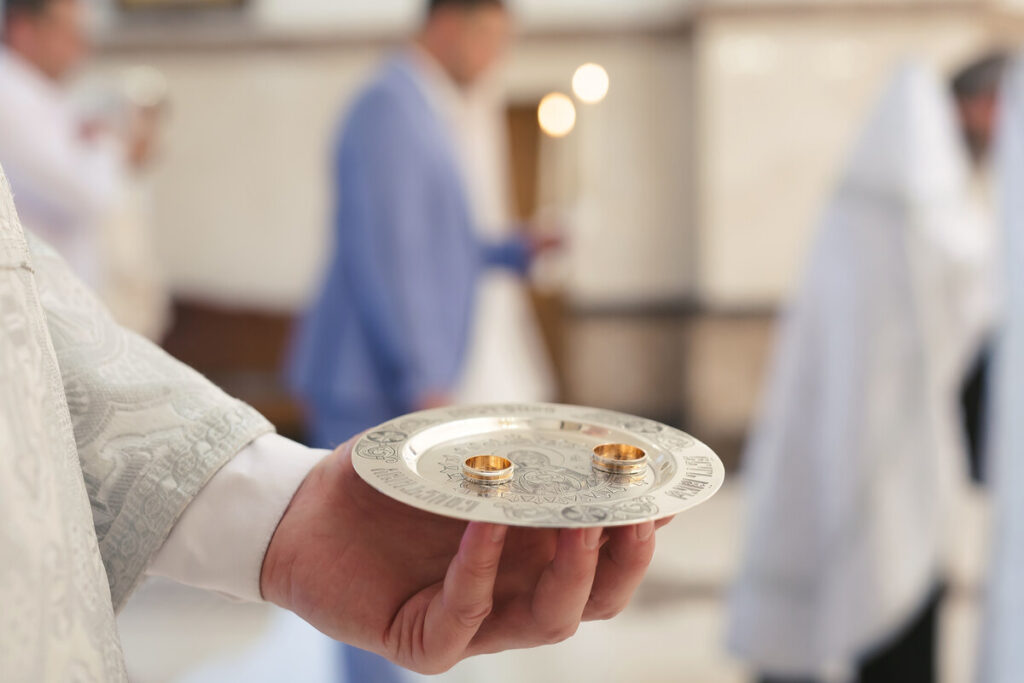
So Sofia found a husband. In 1868 she entered a “fictitious marriage” with Vladimir Kovalevsky, a radical student and book publisher who was the first to translate and publish Charles Darwin in Russia. She called him her brother, and the marriage was not consummated.
Here is the twist. According to her close friend Elizaveta Litvinova, Sofia could probably have convinced her father to let her go. She chose the fake wedding anyway, because it was more dramatic and very fashionable among the young radicals of her generation.
A Berlin university that would not let her sit in
The certificate got her out of Russia, not into a classroom. In Heidelberg she could only audit lectures, and only with each professor’s approval. In Berlin, in 1870, the university refused to let her attend at all.
So she took private lessons with the mathematician Karl Weierstrass instead. He was so impressed that for three years he taught her, one on one, the same material he gave his university students.
In 1874 she submitted three papers to the University of Göttingen: on partial differential equations, on the dynamics of Saturn’s rings and on elliptic integrals. She earned her doctorate summa cum laude, and Weierstrass even got her excused from the usual oral exam.
The first of those papers contains what is now called the Cauchy–Kovalevskaya theorem. In plain words, it guarantees that a large family of equations describing change actually has solutions, at least close to the starting conditions you give them.
A spinning top that only three people ever cracked
A doctorate did not buy her a job. Back in Russia, she was never even considered for a professorship because she was a woman. The couple drifted into real estate and oil schemes, and ended up bankrupt.
The rescue came from Sweden. In 1883 Gösta Mittag-Leffler, a fellow former student of Weierstrass, brought her to Stockholm University. A year later she became a professor and an editor of the journal Acta Mathematica.
Then, in 1888, she won the Prix Bordin of the French Academy of Sciences for her work on a classic puzzle: how a heavy solid body spins around a fixed point, like a top. Before her, only two cases had been fully solved, by Euler and by Lagrange. Hers, now known as the Kovalevskaya top, turned out to be the only other one.
Like Sophie Germain before her and Emmy Noether after her, she had to work around the rules just to be allowed to do mathematics at all.
A heroic stature, and a very short life
In 1889 Stockholm made her a full professor, the first woman in Europe in modern times to hold such a position. Russia elected her a corresponding member of its Academy of Sciences, but only after changing its rules, and never offered her a chair.
She also wrote a memoir, plays and a novel, Nihilist Girl. Then, in February 1891, she died of flu complicated by pneumonia. She was only 41.
Historian Roger Cooke summed up what that took: “a doubting society looked on, half-expecting her to fail.” Today an asteroid, a lunar crater and a satellite carry her name, not bad for a girl whose first calculus lesson was the wallpaper.